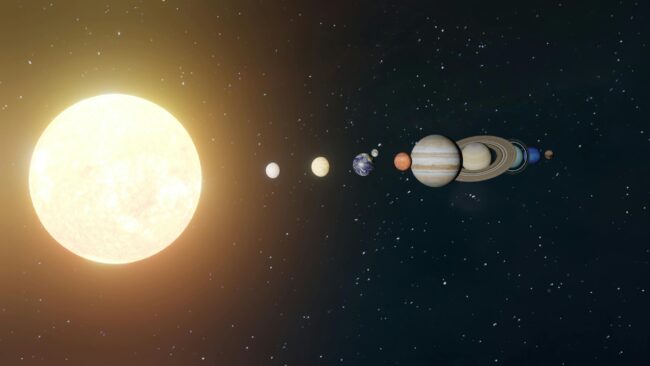
For millennia humanity has gazed upward, wondering about the wandering lights that shift their positions among the fixed stars. These “wandering stars” are planets — our neighboring worlds in the solar system — and even with today’s light-polluted city skies, you can still follow their movements across New York’s heavens.
Whether you’re a hobbyist, an aspiring astronomer, or someone who just enjoys a peaceful night under the stars, tracking planets can be incredibly satisfying. Here’s how to get started.
🌟 1. Know Your Planets: What You’re Looking For
Before tracking, it helps to know which planets are visible to the naked eye and what they look like:
- Mercury: Close to the Sun; visible near sunrise/sunset. Fast moving.
- Venus: The “Morning Star” or “Evening Star”; very bright.
- Mars: Reddish hue; brightness varies with its orbit.
- Jupiter: Bright, steady, cream-colored light.
- Saturn: Golden tint; the rings require binoculars/telescope.
These five are usually the easiest to see from Earth without advanced equipment. Uranus and Neptune are technically visible under dark skies with binoculars or small telescopes — but in New York City’s glow, they’re much harder to spot.
🗽 2. Understand the Basics: Ecliptic & Planetary Paths
Planets travel roughly along the ecliptic — the path the Sun appears to take over the year. From New York’s latitude (~40.7° N), this path stretches across the southeastern to southwestern sky at night.
Here’s what to remember:
- Planets rise in the east and set in the west, just like the Sun and Moon.
- Their positions shift slightly each night as both Earth and the planets orbit the Sun.
- Over days or weeks, you’ll notice planets moving against the background stars.
Because the planets and Sun lie in a similar plane, once you learn where that path is — essentially the zodiac band — you’ll know where to look.
🧭 3. Use Planetarium Apps & Tools
Modern technology makes tracking planetary movements so much easier! These tools show you real-time sky maps tailored to your location — in this case, New York City (or anywhere you are).
Here are some of the most helpful mobile and desktop options:
- Stellarium (app & desktop)
A virtual planetarium that shows the night sky in real time with a simulation of planets, stars, and constellations. You can jump ahead or back in time to see where planets will be tonight, tomorrow, or months from now. - SkySafari (mobile)
Interactive and fun, lets you tap on a planet to identify it and learn details about motion, distance, and rise/set times. - Google Sky / SkyView / Star Walk 2
Simple AR (augmented reality) sky maps where you point your phone at the sky and see labeled planets and stars.
These apps also often include rise and set times, magnitude (brightness), and orbital position — perfect for planning your viewing sessions.
📅 4. Learn Planetary Cycles & Conjunctions
A few key astronomical terms will make your observations more meaningful:
🌀 Conjunctions
When a planet lines up with the Sun (in terms of our line of sight). At these times the planet may be difficult to see because it’s close to the Sun’s glare, but just before sunrise or after sunset you might catch it.
🔄 Opposition (for outer planets)
Happens when Earth lies between the Sun and a planet (e.g., Jupiter or Saturn). The planet rises as the Sun sets — giving you all night to watch. These are prime times for telescopic views.
📉 Retrograde Motion
Oddly, planets sometimes appear to move backward (westward) against the stars. This happens when Earth overtakes them in orbit. Apps like Stellarium can show this visually and explain when retrograde periods occur.
🕶️ 5. Pick the Best Times to Look
In New York’s city skies, light pollution can wash out stars, but bright planets still shine through. Here’s when to look:
🌓 Twilight Windows
- After sunset: Venus and Mercury may appear low in the west.
- Before sunrise: Venus and sometimes Mars or Jupiter may be rising in the east.
Planets are easiest to see when the Sun is below the horizon, but they’re high enough above it to escape glare.
🌓 Plan Around Lunar Phases
Full moonlight can make fainter planets harder to see. For best results with Mars, Jupiter, and Saturn, try nights around new moon or just after sunset/sunrise.
🔭 6. Start with Simple Gear — Then Upgrade
You don’t need a big telescope to start. Here’s a progression:
👀 Naked Eye
The brightest planets — Venus, Jupiter, Mars, Saturn — are all visible without any equipment. Learn their brightness and approximate location relative to constellations.
🔭 Binoculars (7×50 or 10×50)
These are affordable and easy to use:
- Jupiter’s four Galilean moons become visible.
- Saturn’s rings might be hinted at under stable skies.
- Mars’ color becomes richer.
🛠️ Small Telescope
A 4″–6″ refractor or reflector gives better planetary detail — cloud bands on Jupiter, Cassini’s Division in Saturn’s rings, Mars’ polar caps during close approaches.
Remember: atmosphere and city lights matter more than aperture. A calm night with steady air often trumps a larger scope on a windy city evening.
📆 7. Track Over Time: Make a Observation Log
Watching planets isn’t just a one-night thing — it’s a process. Keep a simple log with:
- Date & time
- Planet observed
- Direction (azimuth) and height above horizon
- Weather conditions
- App predictions vs. actual sighting
You’ll start seeing patterns: how fast Jupiter moves night-to-night, or how Saturn creeps along the ecliptic.
🌌 8. Join a Community
New York has an active skywatching community. You can:
- Visit public observing nights at local parks or planetariums.
- Join astronomy clubs like the Amateur Astronomers Association of New York (AAANY) — they organize observing sessions, lectures, and meetups.
- Post observations to social groups or apps like Reddit’s r/Astronomy or the Cloudy Nights forum.
Sharing observations makes it more fun and lets you learn from others’ techniques.
🌤️ 9. Deal with City Skies & Weather
City lights and cloudy weather are the biggest obstacles. Here’s how to cope:
🌆 Find Better Vantage Points
- Rooftops, parks, or waterways (like the Hudson River waterfront) give clearer horizons.
- Even modest elevation helps reduce streetlight glare.
☁️ Watch Weather Forecasts
Clear, calm nights are ideal. Apps like Clear Outside or Weather Underground help identify gaps in cloud cover.
🌠 10. Have Fun with It!
Tracking planets isn’t just observational — it’s a ticket to a cosmic perspective:
- Notice how Venus shifts from evening to morning star over months.
- Watch Mars slowly circle through constellations.
- See Jupiter dancing near Saturn during close conjunctions.
True, New York City is bright, but planets are bright too — and your connection to the wider solar system is right overhead.
🌌 Final Thoughts
Tracking planetary movements over New York’s skies is both accessible and deeply rewarding. With a few simple tools, planetary apps, a bit of planning, and a willingness to step outside after dusk or before dawn, you’ll begin to see the dynamic motions of our neighboring worlds. The planets aren’t fixed — they wander — and learning their patterns gives you both a sense of cosmic rhythm and a front-row seat to the dance of the solar system.
Generated by ChatGPT